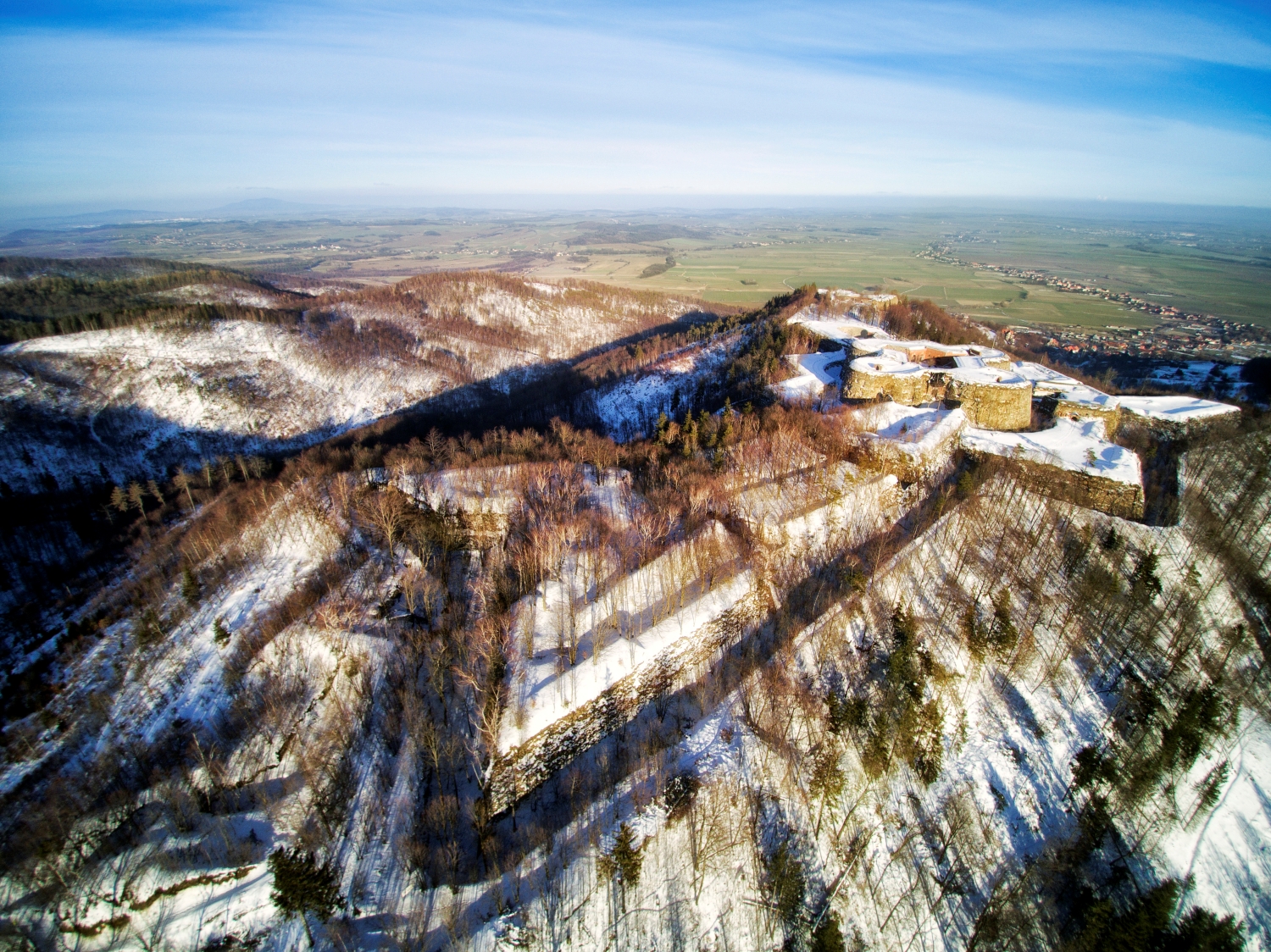
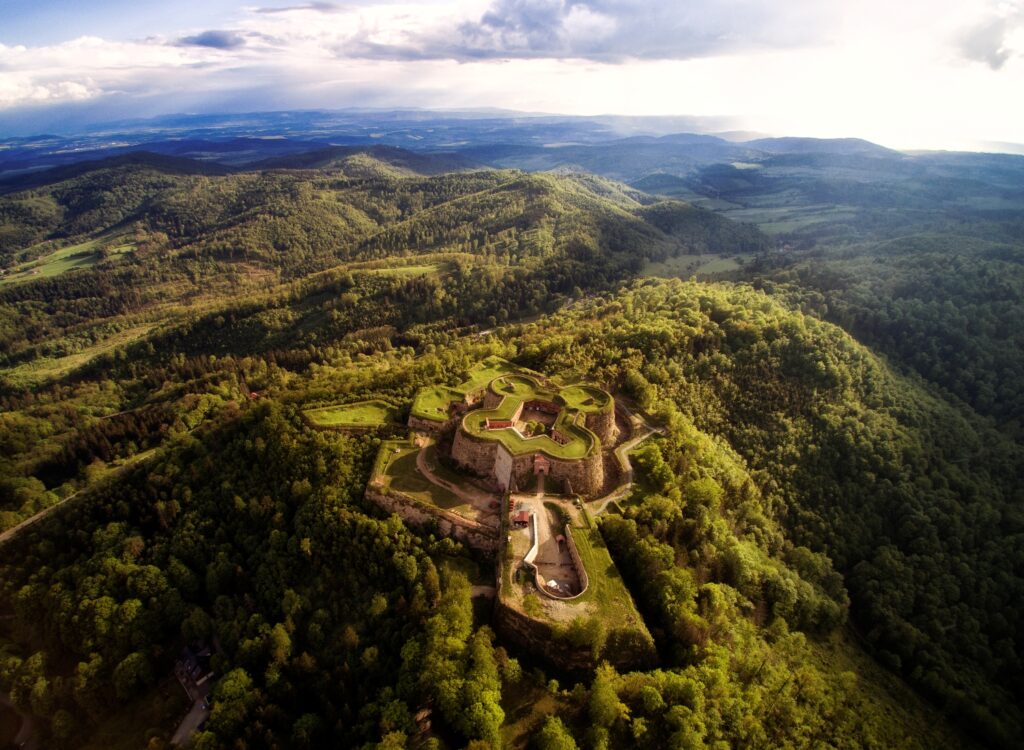
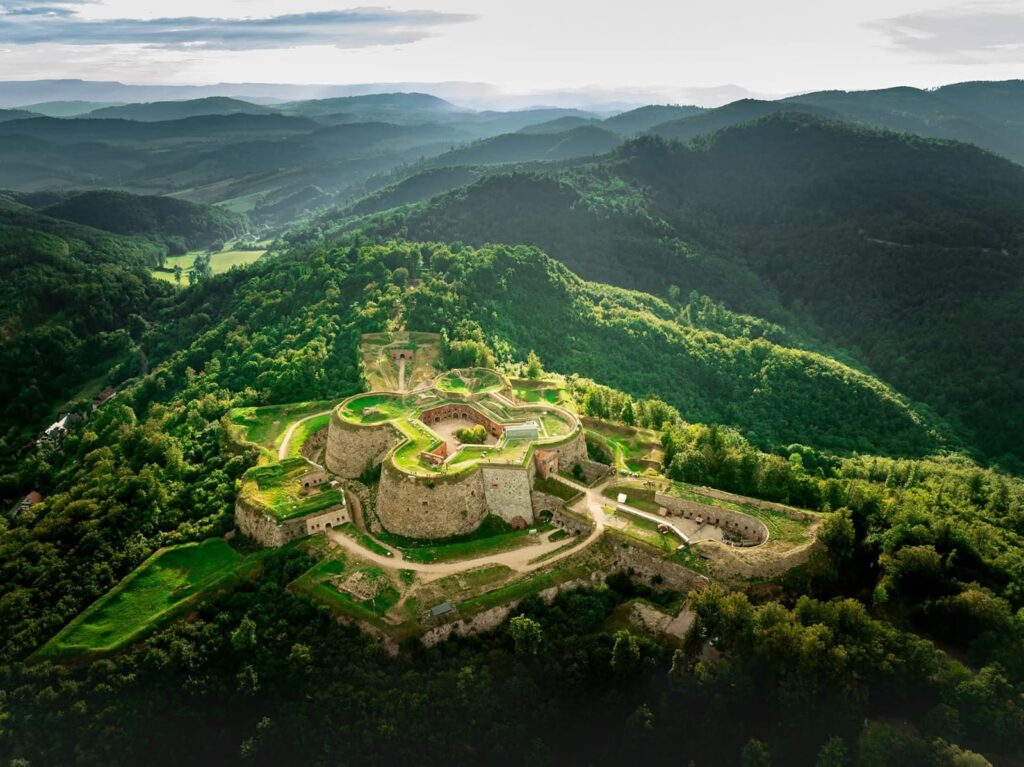
The Srebrna Góra Fortress (Polish: Twierdza Srebrna Góra) is located in Lower Silesia, Poland, and is considered one of the largest mountain fortresses in Europe. It was built between 1765 and 1777 under the rule of Prussian King Frederick II to secure the strategically important border between Prussia and Austria. The imposing complex is perched on a ridge at an altitude of about 686 metres above the town of Srebrna Góra and is characterised by an extensive system of bastions, casemates, tunnels and underground passages.
The fortress is characterised by its massive walls and sophisticated defence system, which made it virtually impregnable. The main structure, known as the donjon, is surrounded by several defensive rings. Throughout its history, the fortress has served not only military purposes, but also as a prison at times. Today, it is an important cultural monument and attracts numerous visitors as a museum and event venue. The Silberberg Fortress is a prime example of architectural adaptation to extreme topographical conditions and is an impressive testimony to 18th-century fortification architecture.
Location and topography
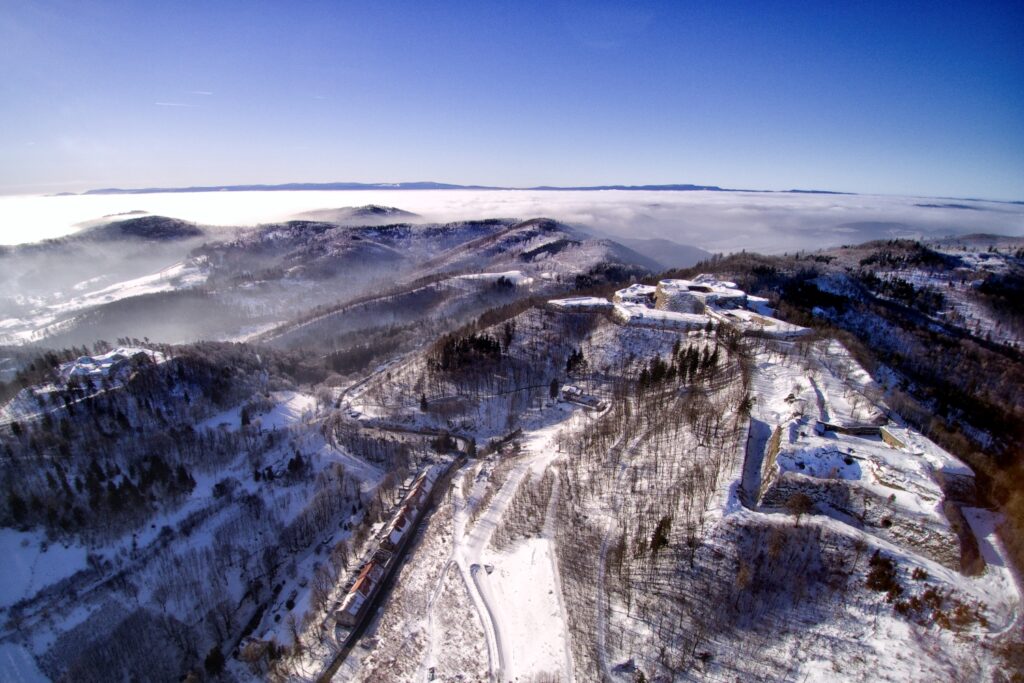
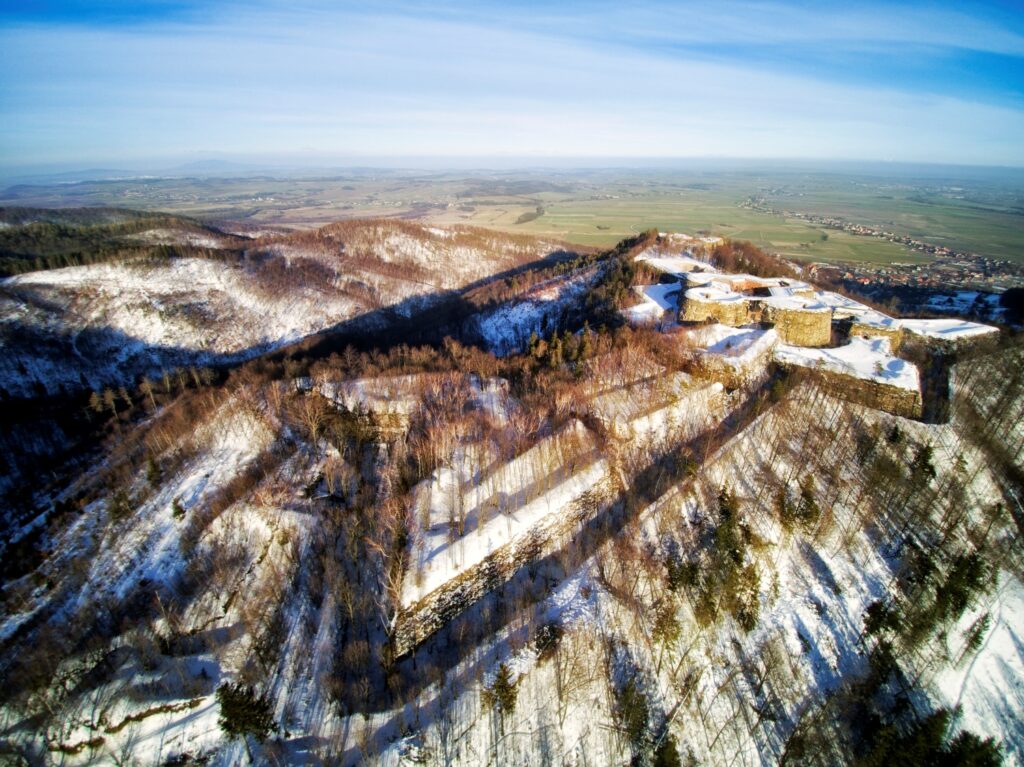
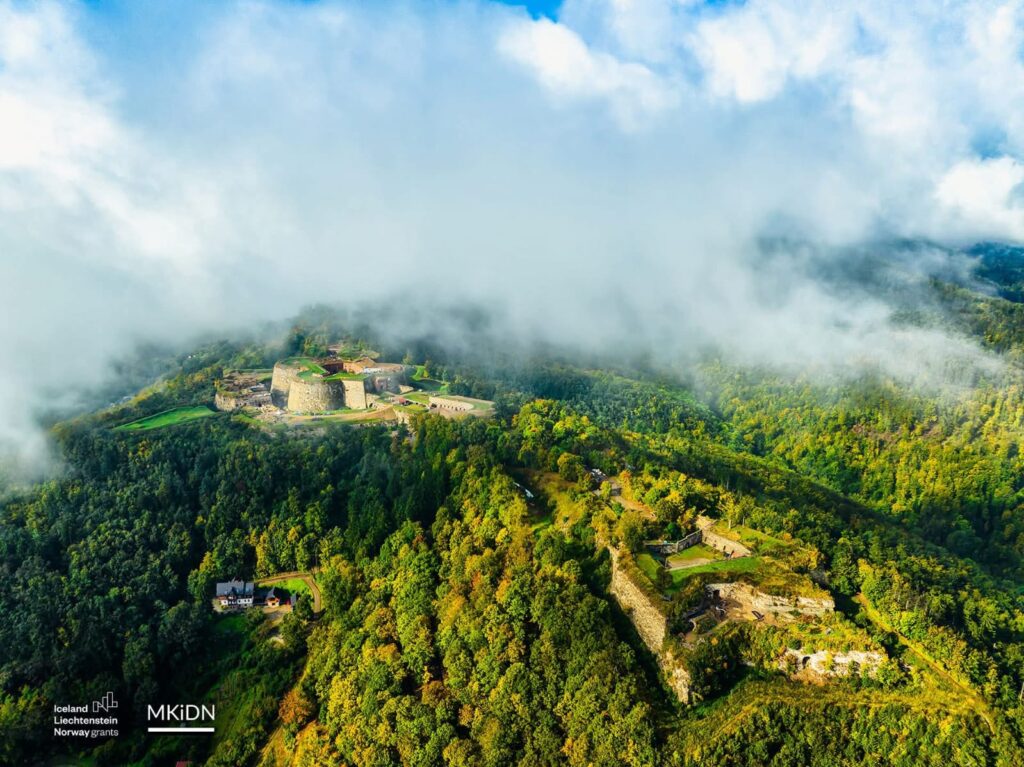
The Srebrna Góra Fortress (Twierdza Srebrna Góra) is located in Lower Silesia, Poland, and rises to a height of approximately 686 metres above the town of Srebrna Góra. Its strategic location on a ridge between Prussia and Austria determined its function as a border fortress and shaped its entire architectural development. The exposed location not only made construction difficult, but also offered excellent opportunities for monitoring and defending the surrounding area.
Construction history
The fortress was built between 1765 and 1777 under the Prussian King Frederick II. The construction period reflects the enormous scale and logistical challenges involved in creating one of the largest mountain fortresses in Europe. Different construction phases and later extensions can still be seen today in the different architectural styles and materials used.
Overall concept and structure
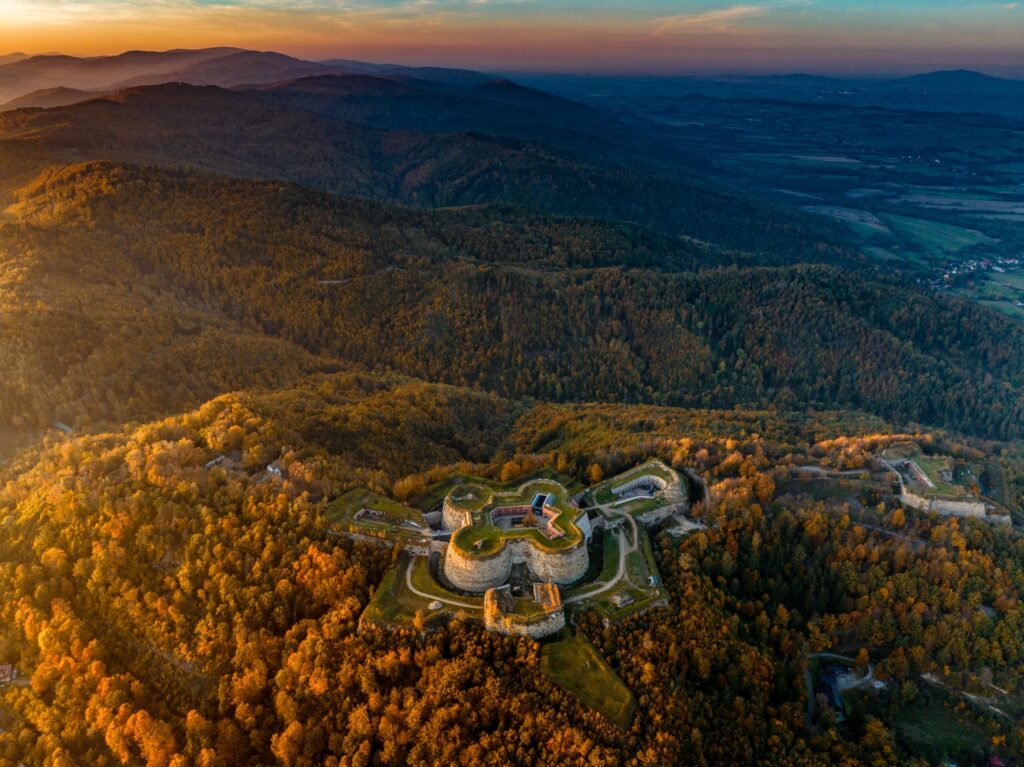
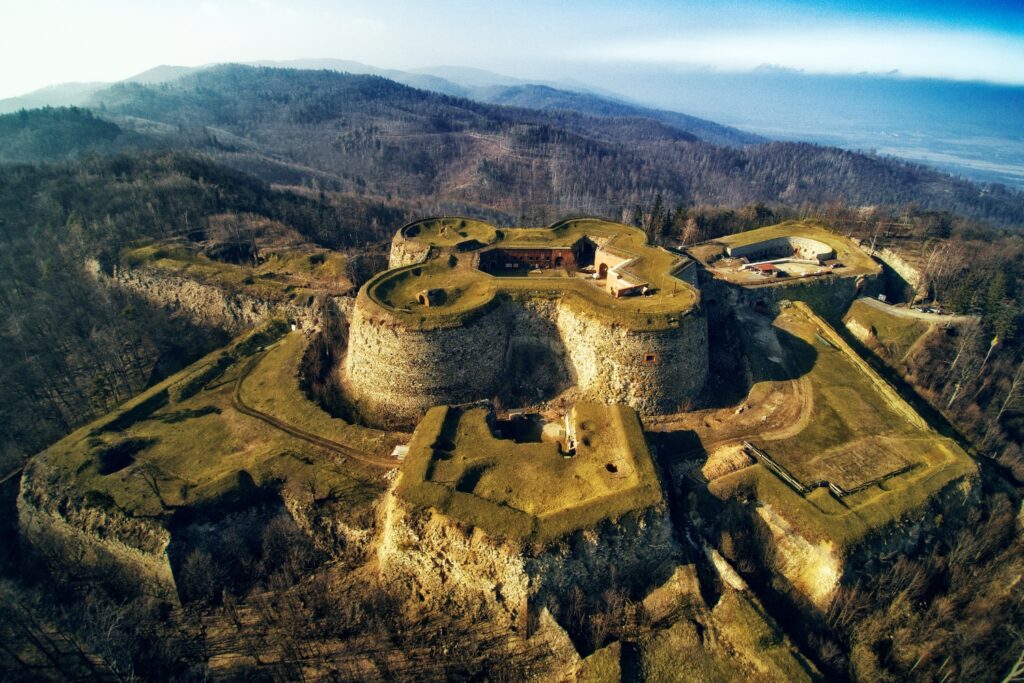
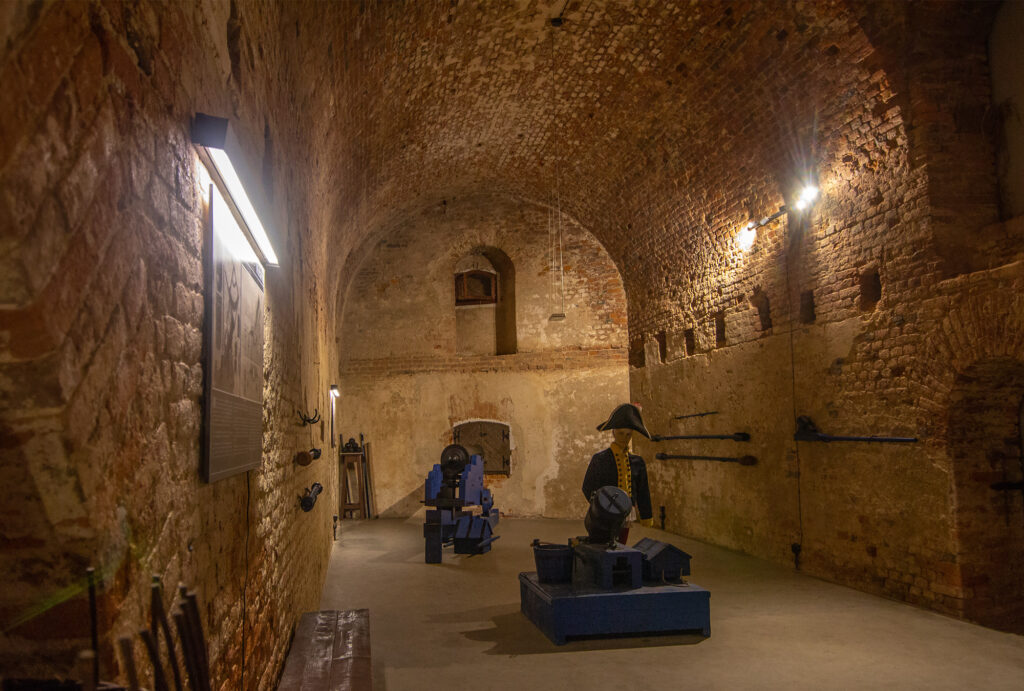
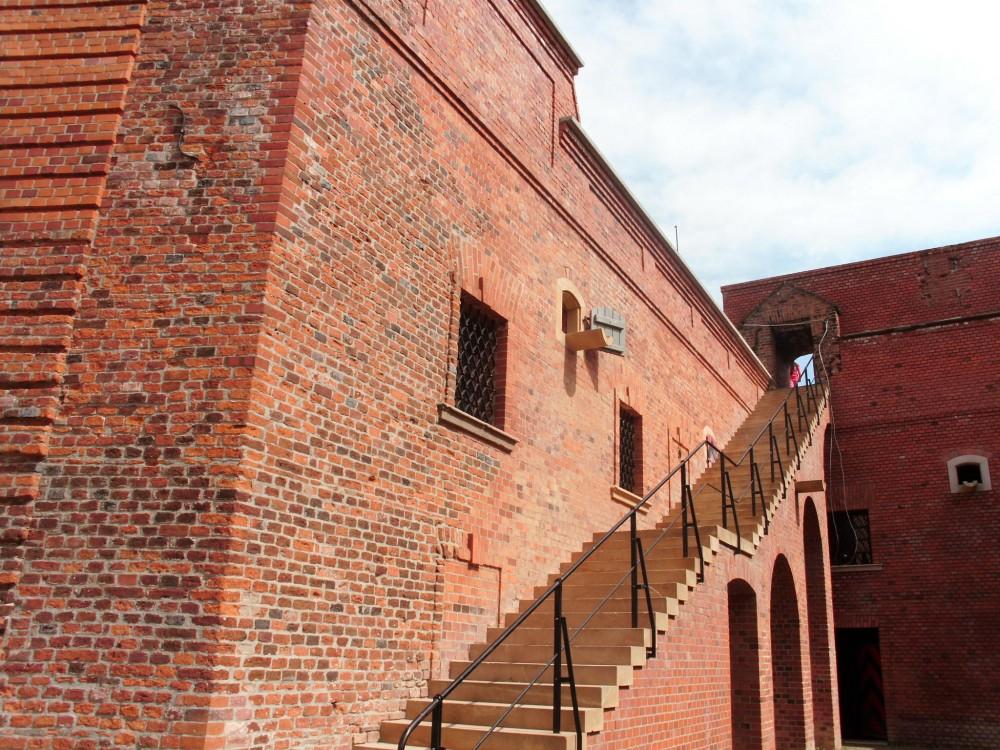
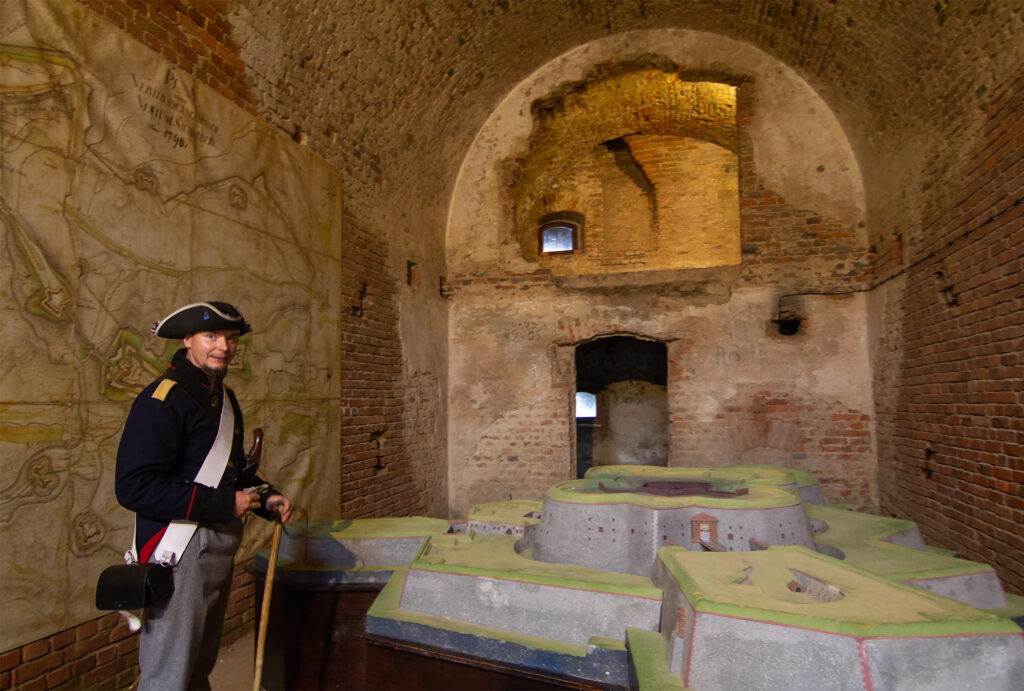
The fortress is designed as a complex system of bastions, casemates, tunnels and underground passages. At its centre is the donjon, a mighty round building with multi-storey casemates. Several defensive rings, ravelins and outer works surround the main structure and provide staggered protection against attacks. The connection of the individual structures by underground passages allowed soldiers and materials to move safely – even during sieges or artillery fire.
Function and use
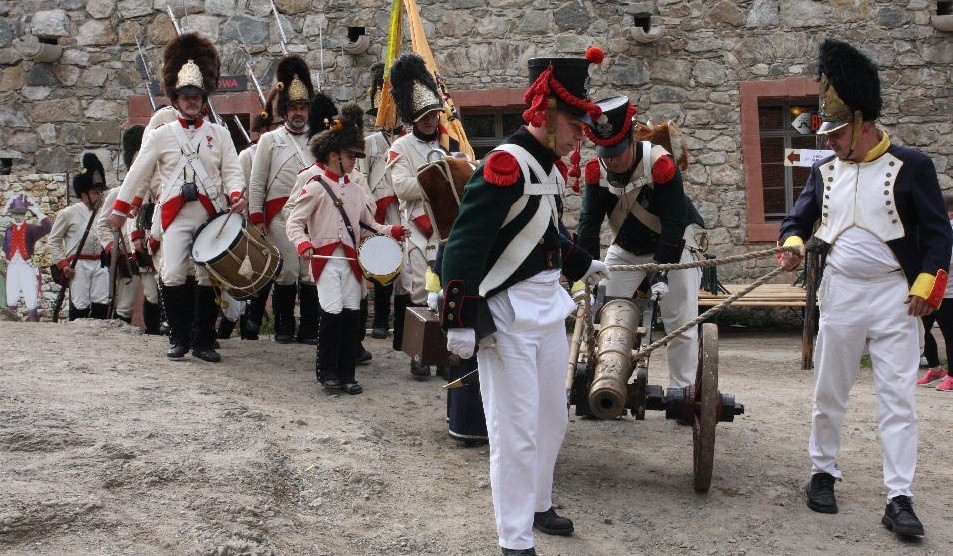
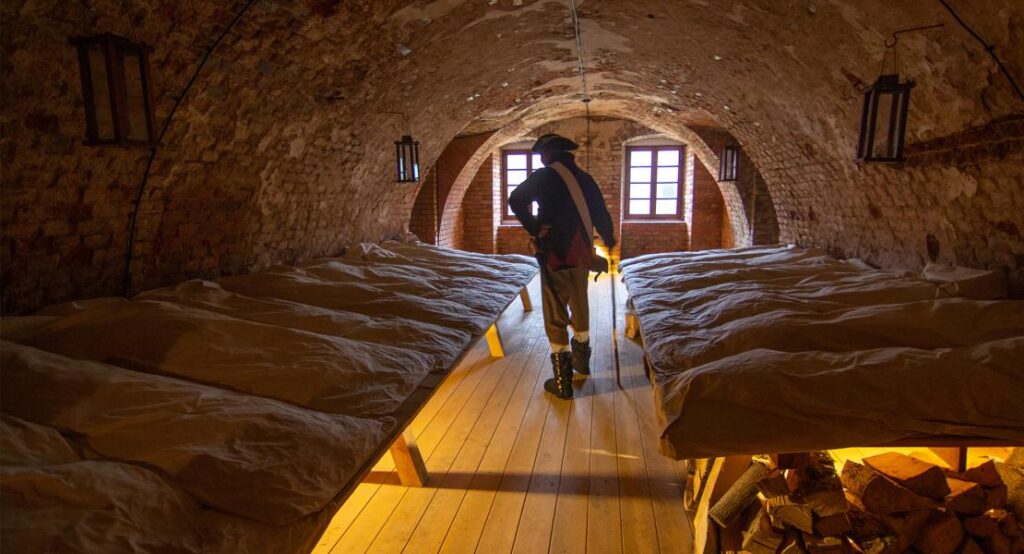
During its active period, the fortress served primarily military purposes and was designed as an almost impregnable protective wall. However, in the course of its history, it was also used as a prison. Self-sufficiency was ensured by barracks, workshops, storage facilities, water reservoirs and a military hospital, underlining its suitability for long-term defence.
Architectural features
The fortress is characterised by massive walls and a sophisticated defence system. Ventilation shafts, a sophisticated water supply system and the intelligent arrangement of the buildings are testament to the advanced engineering of the 18th century. The various elements were optimally adapted to the extreme topography, which gives the complex its impressive presence to this day.


Significance today
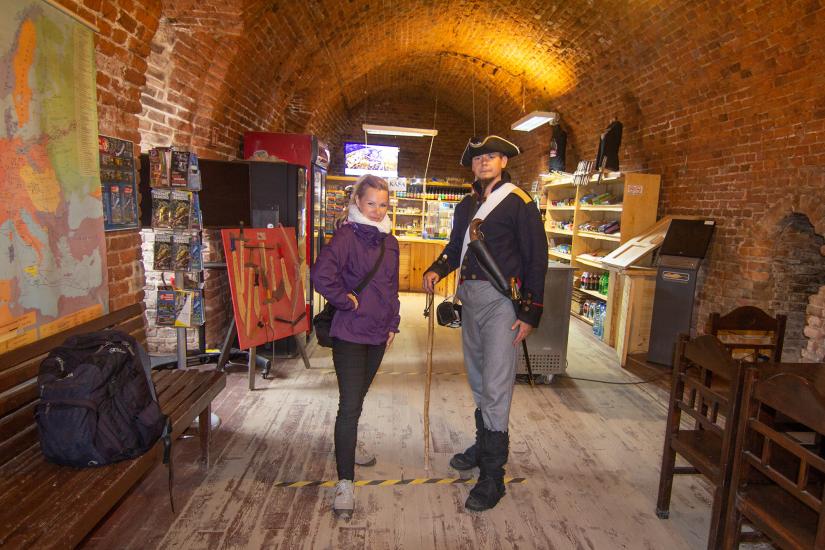
Today, the Silberberg Fortress is an important cultural monument that attracts numerous visitors as a museum and event venue. It exemplifies the transition from military use to a platform for remembrance culture and the communication of European heritage. Its preservation and ongoing research make it a living testimony to collective history.
If you see this after your page is loaded completely, leafletJS files are missing.
Contact

 English
  Polish
Leave a Reply