A research trip to impressive fortifications in the mountains of Europe

Tag: Napoleon

  • Fortress Fenestrelle (IT)

    Fortress Fenestrelle (IT)

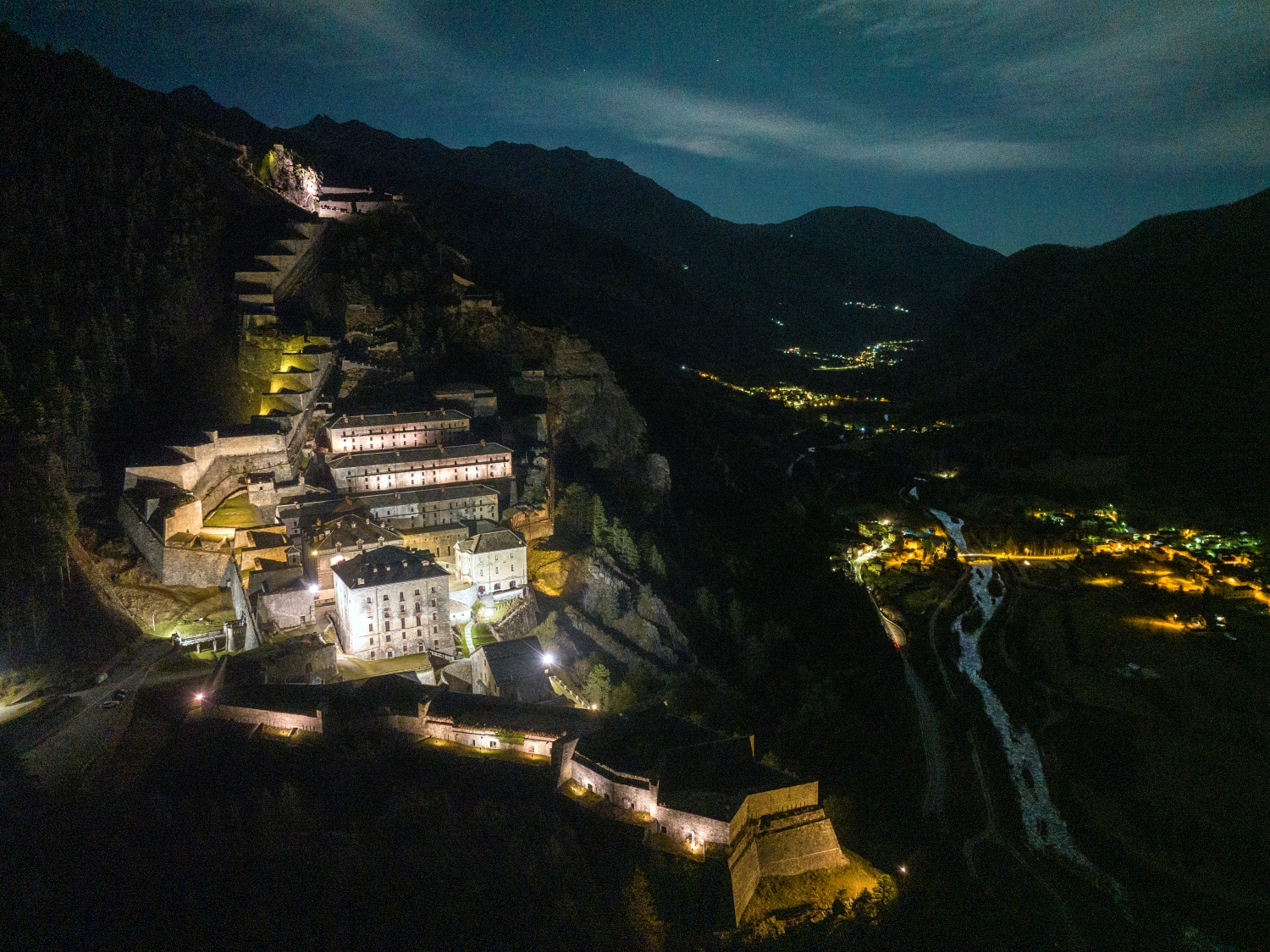
    The Fenestrelle Fortress, known as the ‘Great Wall of the Alps’, is a monumental masterpiece of military architecture. As the largest Alpine fortification in Europe, it covers 1.3 million square metres in the Piedmontese Val Chisone. Its construction, under the architect Ignazio Bertola, lasted from 1728 to 1850.

    Its special features as a mountain fortress are particularly evident in its topographical adaptation: unlike compact fortresses on flat land, Fenestrelle follows a linear, terraced concept that stretches up the mountainside like a stone barrier over a massive difference in altitude of about 635 to 700 metres. The complex organically integrates natural rock ledges and gorges as defensive elements, so that from a distance it appears to be part of the mountain itself. A specific feature of Alpine fortification architecture is its ability to cope with extreme climatic conditions: the Scala Coperta, a brick tunnel with 3,996 steps, enabled the garrison to move troops between 1,100 m and 1,800 m above sea level all year round, protected from the weather and bombproof.

    In addition, 28 terraced risalti (artillery batteries) covered every blind spot on the steep slope. This vertical staggered arrangement of the forts San Carlo, Tre Denti and Delle Valli was so daunting that there was never a major siege. Today, the fortress, which also served as a state prison, is the official symbol of the metropolitan city of Turin.

    Location and topography

    The Fenestrelle Fortress, often referred to as the ‘Great Wall of Piedmont’, is located in the northern Italian region of Piedmont, about 60 to 80 kilometres west of Turin.

    It towers above the village of Fenestrelle in the Val Chisone, a strategically important high alpine valley in the Cottian Alps, which has served as one of the most important transit routes between France and the Po Valley since the Middle Ages. The topographical feature of the complex is its extreme vertical extension: it stretches over a horizontal distance of about three to five kilometres along a steep mountain slope, overcoming a massive difference in altitude of approximately 635 to 700 metres. The fortress begins in the valley at an altitude of about 1,100 metres with the Ridotta Carlo Alberto and culminates in the Forte delle Valli on the ridge of Mount Pinaia at 1,800 metres above sea level. This exposed location enabled the garrison to control the entire valley without interruption. The architects integrated the fortifications organically into the rock, so that from a distance they appear to be part of the mountain itself.

    Construction history

    The genesis of the fortress is closely linked to the geopolitical tensions between the House of Savoy and France. The modern history of the fortifications began in 1694 with the construction of the French Fort Mutin under Louis XIV, based on plans by Vauban. After the conquest by Victor Amadeus II of Savoy in 1708 and the official cession of the territory in the Treaty of Utrecht (1713), Fort Mutin was deemed inadequate. In 1727, military engineer Ignazio Bertola was commissioned to design a much more powerful structure. The actual construction phase of the present-day complex began in the summer of 1728 and lasted a total of 122 years. During the most intensive phases, over 4,000 workers were involved at the same time. After interruptions during the Napoleonic era, construction was resumed under King Charles Albert in 1836 and finally completed in 1850 with the completion of the Ridotta Carlo Alberto. By the time it was completed, the fortress was already partially obsolete militarily due to the rapid development of artillery technology.

    Overall concept and structure

    In contrast to traditional, compact star-shaped fortresses, Fenestrelle follows a linear, terraced concept. The complex is designed as a massive barricade, staggered up the mountainside and consisting of three main fortresses that are operationally connected to each other: the Fort San Carlo at the lowest level, the Fort Tre Denti as an intermediate station and the Forte delle Valli at the top. These core elements are linked by a network of seven redoubts (such as Santa Barbara and delle Porte), 28 terraced artillery batteries (risalti) and a continuous wall structure approximately three kilometres long. The total built-up area covers approximately 1.3 to 1.35 million square metres. The centrepiece, Fort San Carlo, served as the administrative centre and houses representative buildings such as the governor’s palace and a church. A unique feature is the connection of all parts by monumental staircase systems, which enable protected communication across the entire height difference.

    Function and use

    Die primäre Aufgabe der Festung war die Funktion als strategische Defensivbarriere zum Schutz Turins vor französischen Invasionen. Interessanterweise war ihre psychologische Abschreckungswirkung so groß, dass es während ihrer gesamten aktiven Dienstzeit nie zu einer größeren Belagerung kam. Neben der militärischen Nutzung diente Fenestrelle über weite Strecken als berüchtigtes Staatsgefängnis. Zu den prominenten Inhaftierten zählten der Philosoph Joseph de Maistre und Kardinal Bartolomeo Pacca. Besonders bemerkenswert ist die Inhaftierung von Pierre Picaud, dessen Lebensgeschichte Alexandre Dumas als Inspiration für „Der Graf von Monte Christo“ diente. Nach der Vereinigung Italiens 1861 wurden dort tausende Soldaten des untergegangenen Königreichs beider Sizilien sowie politische Dissidenten interniert. Ab 1887 wurde die Festung zum Stützpunkt des 3. Alpini-Regiments, was ihre Bedeutung für die Gebirgskriegsführung unterstrich. Erst 1947 wurde die Anlage offiziell dekommissioniert und dem Verfall preisgegeben.

    Architectural features

    The most outstanding feature of the fortress is the Scala Coperta (covered staircase), a unique brick tunnel that covers a length of almost two kilometres and comprises 3,996 steps. It is designed to be ‘bombproof’, with outer walls up to two metres thick, and allowed the garrison to reach all sectors regardless of weather conditions and protected from shelling. Parallel to this, the Scala Reale (Royal Staircase) runs outdoors with around 2,500 to 3,000 steps, which was primarily used for ceremonial purposes. Another striking element are the 28 Risalti, gigantic stone artillery positions that rise like steps on the slope and could cover every blind spot on the terrain. Among the architectural highlights of Fort San Carlo are the three-storey Governor’s Palace from 1740, the comfortable officers’ pavilion with 44 heated rooms, and the Baroque church of San Carlo. Technical sophistication is also evident in the Ponte Rosso, a bridge with integrated mine chambers that could be blown up in the event of an attack.

    Significance today

    Today, the Fenestrelle Fortress is the official symbol of the metropolitan city of Turin and an important cultural monument. After the complex was severely damaged by looting and weathering after the Second World War, a new life cycle began in 1990 thanks to the voluntary work of the Associazione Progetto San Carlo. In 2007, the fortress was included in the World Monuments Fund (WMF) list of the 100 most endangered cultural monuments in the world, underlining its international significance. Every year, the various tours – from short visits to the seven-hour ‘royal hike’ to the summit – attract tens of thousands of visitors. There are also efforts to have it nominated as a UNESCO World Heritage Site under the title ‘European Mountain Fortresses’. Today, Fenestrelle serves as a living museum of military architecture and an important tourist attraction for the Val Chisone.


    Travelers’ Map is loading…
    If you see this after your page is loaded completely, leafletJS files are missing.

    Contact
    Fortress Fenestrelle

    Via del Forte 1, 10060 Fenestrelle (TO), Italien

    Phone: +39 0121 83600
    E-Mail
    Website

  • Fortress Königstein, Sachsen (DE)

    Fortress Königstein, Sachsen (DE)

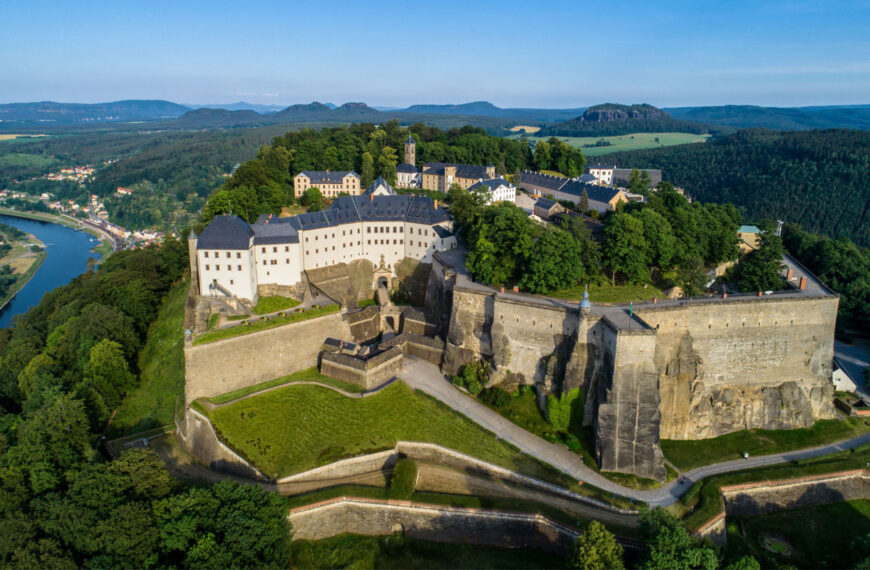
    Nestled in the Elbe Sandstone Mountains, the town of Königstein lies on the banks of the River Elbe. The Königstein fortress of the same name, one of the largest and most beautiful mountain fortresses in Europe, is enthroned on the table mountain high above it. The fantastic view alone, which can be enjoyed from almost every point along the 1700 metre-long rampart walk, is worth the climb.

    In addition to the panorama, the exciting architecture and history, the extremely varied and diverse adventure programme for young and old sets new standards in European fortress tourism.

    Location and topography

    Königstein Fortress is picturesquely situated on a striking sandstone plateau above the Elbe Valley and is surrounded on almost all sides by steep rock faces, giving it a natural inaccessibility. This exposed location not only offered an excellent view of the surrounding countryside, but also made the fortress a difficult stronghold to capture. The topographical conditions were cleverly exploited to maximise the defensive capabilities of the complex while ensuring good visibility for the early detection of potential attackers.

    Construction history

    Königstein Fortress sits enthroned on a sandstone plateau in the Elbe Valley and is considered one of Saxony’s most important defensive structures. Its natural location with steep rock faces made it a difficult stronghold to capture. The medieval castle was first mentioned in 1233 by King Wenceslaus I of Bohemia. In 1459, it came to the Duchy of Meissen and the Electors by the Treaty of Eger. Under Elector Christian I of Saxony and his successor, the medieval castle was expanded between 1589 and 1597 to become the strongest fortress in the country. During this period, striking structures such as the gatehouse, the weir, the old barracks, Christiansburg Castle and the old armoury were built, which still characterise the fortress today. Further construction phases followed in the 17th and 19th centuries, adding additional buildings and defensive structures to the ensemble and completing its construction.

    The fortress was continuously expanded and modernised and remained militarily impregnable. In 1806, it became a fortress of the Confederation of the Rhine, and Napoleon attested to its absolute defensibility in 1813. From 1815 onwards, it was the only Saxon state fortress and served as a refuge for the royal family. From 1870 onwards, it was used as a prisoner-of-war camp and military hospital, and later as a youth work camp. Hidden in the forest, there is even a rock bunker from the GDR era designed to protect against nuclear, chemical and biological attacks. Since 1955, the fortress has been a museum and cultural landmark, offering insights into Saxony’s military history.

    Overall concept and structure

    Königstein Fortress rises impressively on a table mountain in the Elbe Sandstone Mountains and is virtually impregnable due to its exposed location. The extensive area is surrounded by massive walls and comprises numerous bastions arranged in a star shape, offering views of the surrounding countryside. A sophisticated system of gates, casemates and rock passages connects the various levels, ensuring efficient defence and mobility for the garrison. At the centre of the complex is the main plateau with important buildings such as the garrison church, the well house and the commanders’ houses, which are supplemented by underground passages.

    Function and use

    Since its inception, Königstein Fortress has primarily served to secure the Saxon border and protect against enemy attacks. During various conflicts, it served as a refuge for princes, a repository for state treasures and a prison for high-ranking prisoners – over 1,000 prisoners were held here until 1922.

    In times of peace, Saxon rulers used the complex as a retreat and hunting lodge. Parts of the fortress were used as a garrison, camp and training centre. Today, the complex is an important museum and popular tourist destination, offering a fascinating insight into Saxony’s military history. In addition to the panorama, the exciting architecture and history, the extremely varied and diverse programme of activities for young and old sets new standards in European fortress tourism.

    Architectural features

    The architectural diversity of the fortress ranges from late Gothic elements to Renaissance and Baroque to the 19th century. This mixture of styles reflects the various phases of development and makes the complex a unique testimony to Saxon architectural history. With an area of 9.5 hectares, a 1,700-metre-long rampart walk and walls up to 42 metres high, Königstein Fortress is one of the most impressive fortifications in Central Europe. Saxony’s deepest well, with a depth of 152.5 metres, is another technical masterpiece within the complex. Decorative elements such as coats of arms, inscriptions and historical portals bear witness to the importance and eventful architectural history of the fortress.

    In the 1960s, the GDR civil defence authorities converted the Königstein Fortress’s war powder magazine into a bunker with gas-tight fire doors, overpressure ventilation locks, a ventilation system, an emergency power generator and a water tank. Numerous walls were erected in the large room to create enclosed areas.

    Significance today

    Today, Königstein Fortress is one of Germany’s most important historical buildings. Between 400.000 to 500.000 visitors conquer the impressive fortress year by year. It is a place of living history, where exhibitions, concerts and events are held regularly, almost barrier-free. The fortress makes a significant contribution to the cultural identity of the region and is an outstanding example of Central European fortress architecture.

    Königstein Fortress is part of the FORTE CULTURA regional cluster ‘Elbe Fortresses’. Together with other fortress monuments along the Elbe in the Czech Republic and Germany, activities to promote this special cultural heritage are coordinated.


    Travelers’ Map is loading…
    If you see this after your page is loaded completely, leafletJS files are missing.

    Contact

    Fortress Königstein gGmbH

    08124 Königstein
    Germany

    Phone: +49 35021 64-607
    E-Mail
    Website

  • Fortress Rocca d’Anfo, Valle Sabbia (IT)

    Fortress Rocca d’Anfo, Valle Sabbia (IT)

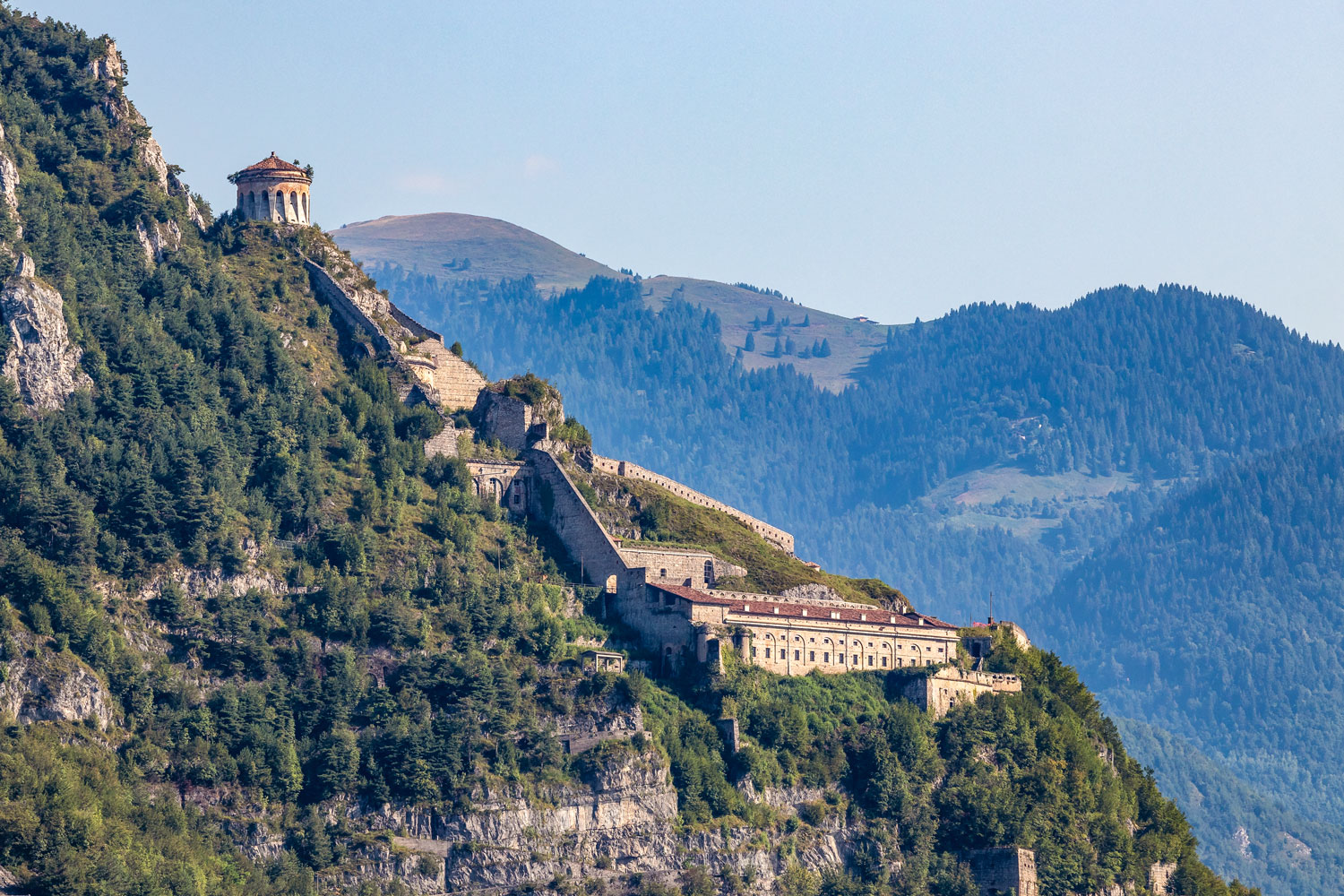
    The Rocca d’Anfo fortress is located on the western shore of Lake Idro in northern Italy and was originally built in the 15th century under the rule of the Republic of Venice. Its strategic location allowed it to control important transport routes between Lombardy and Trentino. Over the centuries, the complex was repeatedly expanded and adapted, particularly during the Napoleonic era and under Austrian administration.

    The Rocca d’Anfo is characterised by a variety of structures, including bastions, casemates and underground passages, arranged at different levels. The steep stairs and paths connecting the individual defensive structures are particularly noteworthy. Today, the fortress offers exciting guided tours and cultural events and is a popular destination for history buffs and hikers.

    Location and topography

    The Rocca d’Anfo fortress is perched on a steep ridge with a direct view of Lake Idro. Its exposed location not only allows for extensive surveillance of the surrounding area, but also makes access difficult for potential attackers. The natural environment, with its rugged rocks and steep slopes, was cleverly integrated into the defence strategy, providing the fortress with optimal protection. Today, the site also offers numerous vantage points from which visitors can enjoy the impressive landscape of northern Italy.

    Construction history

    The construction history of Rocca d’Anfo is characterised by continuous extensions and adaptations to changing military requirements. The fortress was originally built in the 15th century under the rule of the Republic of Venice as a simple fortification to control the strategically important connection between Lombardy and Trentino. During the Napoleonic era, especially at the beginning of the 19th century, extensive expansion work was carried out: Napoleon had the complex significantly enlarged and equipped with modern defensive elements to adapt it to the requirements of warfare at that time. Covering an area of around 50 hectares, it includes batteries, barracks, towers, a network of underground tunnels and passageways, and a belvedere as a lookout point. The fortress was further reinforced and expanded under the subsequent Austrian administration.

    Overall concept and structure

    The fortress is structured according to a clear overall concept that adapts harmoniously to the terrain. The various defensive structures are arranged on several levels and connected by a sophisticated system of paths and stairs. This ensured both efficient defence and flexible troop transport within the complex. The central bastion forms the heart of the fortress and is surrounded by further casemates and supply buildings, which in turn are connected by underground passages. This structure made it possible to defend the fortress independently over long periods of time and to react flexibly to different threat situations.

    Function and use

    The function of the Rocca d’Anfo changed several times over the centuries. Originally, it served to monitor and secure the border region, in particular to control trade and military routes. During various conflicts, the fortress was used as an important base for garrisons and provided protection for soldiers, equipment and supplies. In times of peace, parts of the complex were occasionally used for storage or as administrative buildings. Decommissioned during the First World War and left to fall into disrepair for decades, work to protect and reconstruct the unique fortifications began in around 2012. Today, some areas can already be visited again on guided tours, always combined with magnificent views of Lake Idro and the surrounding area. The Rocca d’Anfo Museum, which is part of it, offers visitors a unique insight into the military past of the region as well as immersive experiences. Discover with FORTE CULTURA the unique fortress jewel above Lake Idro.

    Architectural features

    A striking architectural feature of the Rocca d’Anfo are the casemates cleverly embedded in the rock, which not only offered optimal protection from bombardment, but also enabled the targeted use of artillery through small embrasures. The massive walls and watchtowers that secure strategically important points of the fortress are also characteristic. Particularly noteworthy is the harmonious combination of military functionality and adaptation to the difficult terrain, which is reflected in the numerous winding corridors, staggered levels and carefully placed bastions.

    Although the Rocca d’Anfo was primarily designed as a military defence structure with a clear focus on functionality and protection, there are still a few decorative elements to be found. For example, simple stone ornaments or coats of arms were affixed to some entrance areas and representative parts of the building, indicating the respective builders or the era in which they were created.

    Significance today

    Today, the Rocca d’Anfo is one of the most important historical sights in the region and is a magnet for history buffs and nature lovers alike. The fortress is open to the public as part of guided tours, during which visitors gain impressive insights into the architecture of past centuries and the complex’s varied uses. In addition, cultural events and exhibitions are regularly held on the grounds, keeping the historical heritage alive and making an important contribution to the development of tourism in the surrounding area.


    Travelers’ Map is loading…
    If you see this after your page is loaded completely, leafletJS files are missing.

    Contact

    Valle Sabbia Solidale – Settore Turismo

    Via Reverberi 2, 25078 – Nozza di Vestone (BS)
    Rocca d’Anfo (dal Venerdì a Domenica))
    Italy

    Phone: +39 375 622 1121
    E-Mail
    Website